
Why a Property Management Company Would Go to AWS re:Invent

How Automated Key Lockers Transform Move-Ins
At On Q Property Management, our mission is simple to say and demanding to execute: Better Residents, Faster.
From the outside, people see homes leased quickly, Residents moving in on time, and Homeowners receiving steady performance. What’s less visible are the systems quietly running in the background that make all of that happen, especially at times when most businesses are closed.
This is an inside look at one of those systems: our Automated Key Locker program. It started as a practical response to a global crisis and evolved into a core part of how we deliver a better leasing experience, not just during holidays, but every night and weekend of the year.
From Emergency Fix to Everyday Advantage
The key locker system didn’t begin as a tech showcase. It began during COVID, at a moment when the industry was forced to rethink how it worked.
We were balancing two priorities that could easily have conflicted with each other: protecting people’s health by minimizing in-person contact and staying fully operational so Residents could still move and Homeowners weren’t left in limbo. Traditional, over-the-counter key pickup inside a busy office simply didn’t fit that reality.
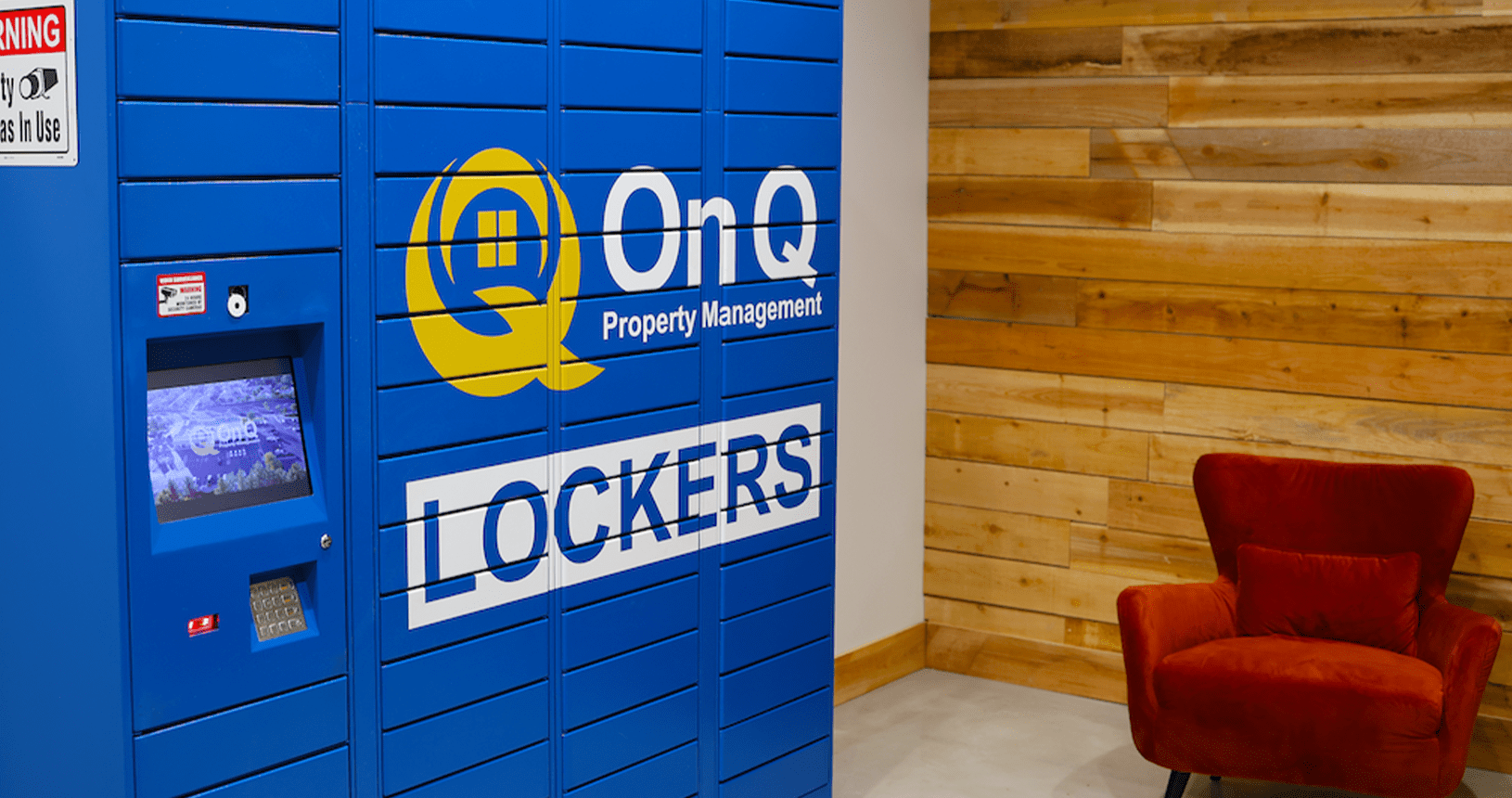
Automated key lockers were the answer. They allowed us to store keys securely, give Residents unique access codes, and track pickups without requiring anyone to stand in a lobby or rush to make it before the doors closed.
What’s important is what happened next: once in-person restrictions eased, we didn’t abandon the system. We realized it had quietly solved a bigger, older problem in property management: How to make the moment someone gets their new home keys, work on their schedule, not ours.

Why the “Last Mile” of Leasing Matters So Much
By the time a Resident is ready to move in, a lot has already gone right. Marketing worked. Showings happened. Applications were screened. Leases were signed. Payments were cleared.
Yet for many renters, the lasting impression comes down to something that sounds small: the process of actually picking up the keys.
This is often where real life collides with traditional business hours. People are juggling work, childcare, moving trucks, travel, and tight timelines. Closings run late. Flights are delayed. Traffic happens. The idea that everyone can take time off in the middle of a weekday to visit an office just to meet someone to grab keys is out of touch with the way people actually live.
We’ve always believed that if we’re going to claim we offer a great leasing experience, we can’t afford to let something so important turn into a source of stress. That “last mile” is where trust is either reinforced or undermined. It’s the moment the house stops being an idea and becomes someone’s home.
What the Key Lockers Really Do
On the surface, a key locker is simple: a secure compartment where we place a Resident’s keys and a unique code that lets them retrieve those keys whenever they arrive.
In practice, it does far more than store keys.
It gives Residents flexibility. They can pick up keys before work at dawn, after a late shift, on a Saturday afternoon, or after a long day of traveling. They don’t have to arrange their lives around a narrow office window or hope someone can “stay late just this once.” They know the keys will be where we said they’d be, when we said they’d be there.
It gives our team consistency. Instead of scrambling to coordinate last-minute handoffs or adjusting schedules to accommodate every edge case, we have a reliable, secure system that works the same way every time. That stability lets us focus more of our energy on supporting people—answering questions, solving problems, and being present when a situation truly requires a human being.
And it gives Homeowners predictability. A clean, documented, and trackable key handoff reduces confusion, reduces risk, and helps set the tone for a responsible tenancy. When the move-in process feels organized, Residents begin their time in the home with confidence instead of frustration.
The hardware and software are important, but the real impact is human: fewer bottlenecks, fewer frayed tempers, and a smoother start for everyone involved.

Looking at the Numbers Without Losing the Human Story
We’re careful about how we talk about numbers. We never want a customer to feel like their home is just another line on a report. Every property represents trust; every Resident represents a household depending on us to get the details right. That said, the data does reveal how the system performs in real-world conditions.
In a recent November across four markets:
- We moved 439 Residents into homes.
- 273 key pickups were completed through our key locker system.
- 95 of those pickups took place on weekends.
- 23 happened over the Thanksgiving holiday window, including pickups as early as 6:00 a.m. and as late as 1:30 a.m.
- Our team also handled 20,813 inbound calls, with over 99% answered within 30 seconds.
To us, these aren’t vanity metrics. They tell a story about behavior and expectations.
The number of move-ins reminds us that behind each lease is a family, an individual, or a household reorganizing their life. The usage patterns in the lockers early mornings, late nights, and heavy weekend activity only confirm what we already know from conversations: people don’t move on a tidy, nine-to-five schedule. Meanwhile, call volume shows that even when technology handles logistics like key handoffs, Residents still want real people available when questions or concerns arise.
We didn’t implement key lockers because we couldn’t keep up. We implemented them because we were staying ahead and saw an opportunity to make that experience smoother, more flexible, and more Resident-friendly.
What Actually Happens Behind the Scenes
From the outside, using a key locker feels straightforward: you receive instructions and a code, you arrive when you’re ready, you enter the code, and you walk away with keys in hand.
Inside our operation, there’s a defined process supporting that simple experience.
Before keys ever go into a locker, our team confirms that all lease documents are signed, deposits are in place, and the home has passed the necessary checks. Keys are carefully tagged, logged, and assigned to a specific locker location. The system generates a unique, time-bound access code that’s communicated to the Resident along with clear, step-by-step instructions.
When the keys are picked up, the locker records the event. We can see when access happened and close the loop on that move-in step with certainty, rather than guesswork. If a Resident encounters a question at any point, whether it’s about the property, utilities, or what to do after pickup our call team is available and ready, not tied up solving “Where are my keys?” emergencies.
The result is a process that feels easy on the outside but is structured, auditable, and scalable on the inside.

The Impact on Residents and Homeowners
For Residents, the benefit is simple but powerful: they’re able to start life in a new home on a schedule that actually fits their reality. They don’t have to lose a day of work, scramble to find someone else to grab keys for them, or reschedule movers because they missed a narrow office window. When they arrive, excited and ready to be move into their new home, the keys are waiting. That first experience sets a tone of reliability and respect.
That tone matters. When move-in feels organized rather than chaotic, Residents are more likely to treat the home like their own from day one, communicate early when anything needs attention, and feel comfortable reaching out instead of letting small concerns grow into larger problems.
For Homeowners, the benefits are just as real, even if they’re less visible day to day. A smoother move-in process means fewer delays, fewer miscommunications, and a reduced risk of lost keys or messy handoffs. It fosters stronger, more stable tenancies, which can translate into better care for the property and a higher likelihood of renewals when the lease term ends. When Residents feel that their time and experience are valued, they tend to stay longer and engage more constructively and that’s good for the asset.
In other words, a small improvement at the front end of the Resident journey can ripple through the entire life of the lease.
Innovation as Ongoing Responsibility
We’re proud of our key locker program, but we don’t see it as a one-time leap ahead or a marketing gimmick. We see it as one example of a broader mindset inside our company.
Being very good at leasing homes isn’t a finish line; it’s a starting point. It gives us the scale and stability to ask harder questions about the experience itself. Where are Residents still feeling friction? Where are Homeowners still left wondering how something works? What can we simplify, clarify, or automate without losing the personal touch?
The lockers sit alongside a much wider effort: clearer move-in communication, responsive call handling, careful Resident placement, and continuous refinement of our maintenance and turnover processes. The common denominator is a commitment to keep improving, not just to do more, but to keep making the experience better. For us, it’s part of a culture that treats operational excellence as a form of customer service.
Built for Nights, Weekends, and Real Life
Holiday weekends are a convenient way to illustrate how the system performs under pressure. The Thanksgiving window, with Residents picking up keys as early as 6:00 a.m. and as late as 1:30 a.m., is a clear example of how the lockers keep things moving when traditional office models would struggle.
But the real value isn’t limited to holidays.
People move when their lives allow it: on Saturdays when family and friends are available, after work when the last box is finally loaded, or late at night after a long drive from another city. Real life is rarely aligned with business hours, and our competitors shouldn’t pretend that it is.
The Automated Key Locker system is designed for that reality. It supports the everyday, not just the exceptions: nights, weekends, and all the unscheduled moments in between.
In the End, the Best Systems Feel Almost Invisible
Most Residents will never talk about key locker technology. They’re not going to rave to friends about access codes, tracking logs, or process design. What they will remember is how the experience felt.
They’ll remember that when they pulled up—tired, excited, and a little anxious—the keys were easy to get, the instructions made sense, and there were no extra hoops to jump through, and there was even water waiting for them in the lobby. Homeowners will remember that move-ins happened when they were supposed to, that the transition into their property felt professional, and that any questions along the way were answered quickly.
That’s what “Better Residents, Faster” looks like in practice: strong leasing fundamentals, thoughtful systems like automated lockers, and a team that still believes in picking up the phone and solving problems.
When everything works the way it should, the systems fade into the background, and people can focus on what really matters: turning a house into a home, and a property into a long-term, well-cared-for asset.