


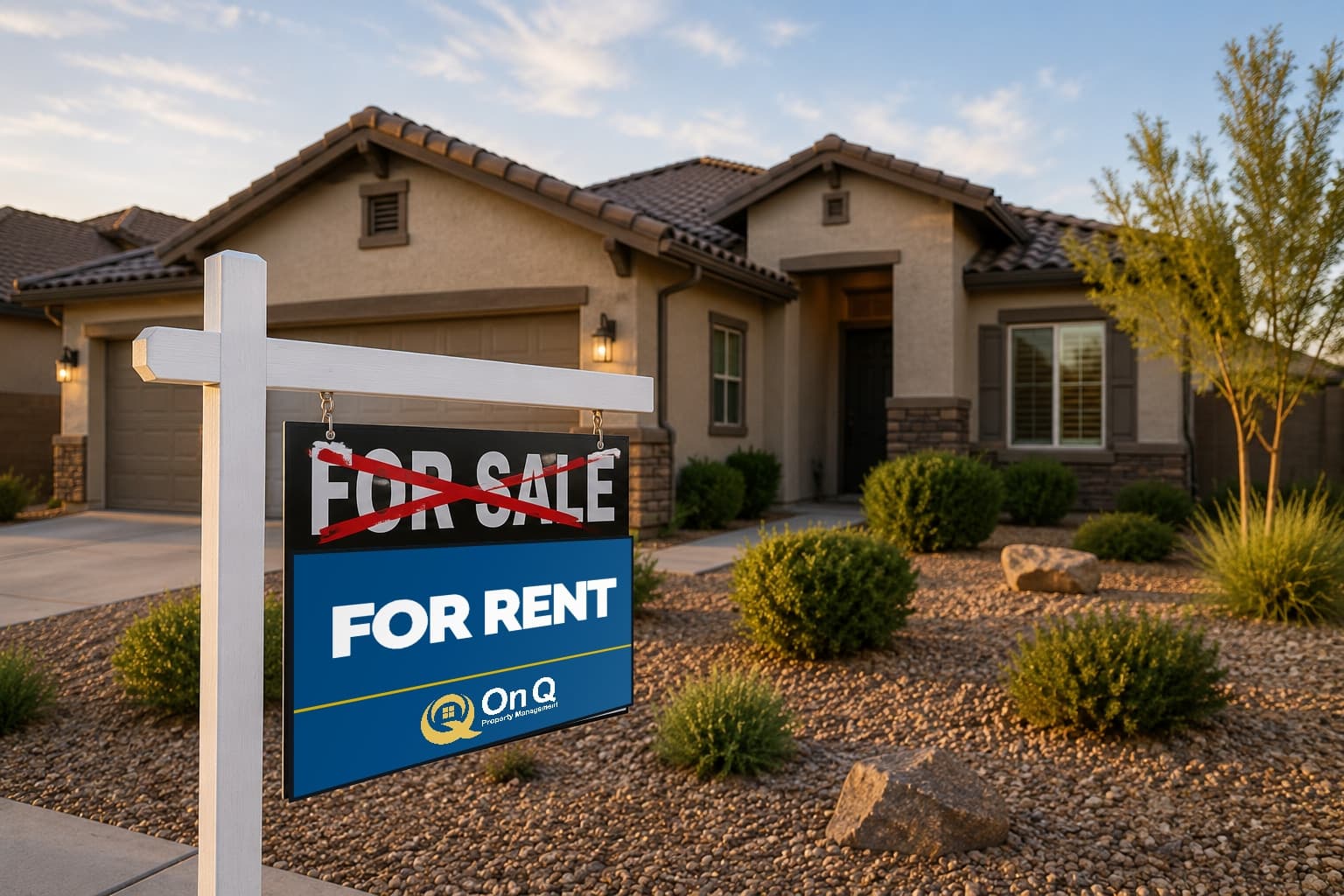
Should You Sell or Rent Your Home in 2026?
If you bought a home in Arizona or Texas before 2022, you are sitting on something valuable. The question is whether selling it is actually the smartest move right now.
Most Homeowners Are Thinking About This Wrong
The instinct to sell when values are high makes sense. Lock in the gains, take the equity, move on. In a normal market, that logic holds.
But this is not a normal market.
Homeowners who locked in mortgage rates below 4% in 2020 or 2021 are not just sitting on appreciated equity. They are sitting on a rate they cannot replace. Selling today means giving that up permanently and re-entering the market at 6.3%, where the monthly payment on the same loan amount is hundreds of dollars higher. That math compounds for the life of the next mortgage.
Meanwhile, the properties they own are still generating rental income. Phoenix median rent sits at approximately $1,549 per month. Dallas is at $1,392. For a homeowner who bought before rates climbed, that monthly income often covers the mortgage entirely.
The case for selling in 2026 is narrower than most people assume. Here is what the data actually shows.
What the Markets Look Like Right Now
Phoenix
Phoenix home values hit all-time highs in 2026, up 2.4% year over year. For homeowners, that is meaningful equity on paper. The complication is that homes are sitting on the market nearly 15% longer than last year. Buyers are there, but they are moving carefully. Sellers are getting strong prices, but the days of accepting offers in 48 hours are behind them.
On the rental side, median rent dipped about 7% year over year to approximately $1,549 per month as new supply from the construction boom entered the market. Demand did not disappear. Renters are still renting. They are just paying less than they were at the peak, which means pricing strategy matters more than it did two years ago.
Tucson
Tucson's rental market cooled from its highs but has been stabilizing through the first half of 2026, with rents ticking up after a period of annual declines. For single-family homeowners with a property in good condition, the income opportunity is still real.
Austin
Austin is the most challenging of the four markets. Rents are down roughly 6% year over year and more than 20% from the 2022 peak, largely because the area added significant multifamily inventory over the last three years. Home prices have also pulled back from their highs.
That cuts both ways. Selling captures less equity than it would have in 2022. Renting produces less income than it did at the peak. For Austin homeowners, the case for holding is about waiting out a soft period rather than locking in a sale at a reduced price.
Dallas and Plano
Dallas is the most stable of the four markets, with home prices forecast to grow 2 to 4% through 2026. Strong employment fundamentals keep rental demand steady, and elevated mortgage rates continue to push would-be buyers into the rental pool. Texas median rent sits at approximately $1,392 per month.
The Case for Holding
For homeowners without a specific reason to exit, the numbers point toward holding.
The rate on the existing mortgage is the single biggest factor. Giving up a sub-4% rate to sell and re-enter at 6.3% is a financial decision that follows a homeowner for decades, not just months. Many are choosing to hold specifically because they understand what they would be trading away.
Rental income covers the mortgage in most cases. In Phoenix, $1,549 per month covers most or all of a mortgage payment for a homeowner who bought before rates climbed. In Dallas, $1,392 does the same. The asset is working. The income is flowing. The homeowner is building equity through appreciation while someone else covers the carrying costs.
These markets reward patience. Phoenix has already recovered to new highs. Dallas is projected to keep growing. Even Austin, the softest of the four, is expected to stabilize before the next growth cycle. Holding through a softer rental period to capture what comes next has historically been the right move in these markets.
The One Obstacle, and How It Gets Solved
The reason most homeowners hesitate to rent is not the math. It is the management.
A rental property requires finding and screening qualified residents, coordinating maintenance, collecting rent, handling lease renewals, and staying on top of anything that comes up during a tenancy. Homeowners who try to manage this themselves often find it takes more time and creates more stress than the income justifies — especially if they no longer live near the property.
That is exactly the problem On Q Property Management exists to solve. On Q handles the entire operation: resident screening, placement, maintenance coordination through Mammoth Services, rent collection, lease compliance, and all communication with the resident. When something breaks, Mammoth handles it. When rent is due, On Q collects it. When a lease comes up for renewal, On Q manages that process too.
The homeowner owns the asset. On Q runs it. The income continues flowing without the homeowner fielding calls at 9pm or spending a Saturday coordinating repairs.
For homeowners who have been on the fence because renting felt like too much work, professional management changes that calculation entirely.
Who Is Renting in These Markets
One thing worth understanding before deciding to hold: the renter pool in Phoenix, Tucson, Dallas, and Austin is not shrinking.
Mortgage rates at 6.3% have priced a significant portion of would-be buyers out of the purchase market. Many people who would have bought a home in 2021 or 2022 are still renting, waiting for rates to come down or saving toward a larger down payment. That cohort is stable, financially qualified, and not going anywhere quickly.
Corporate relocation activity in Austin and Dallas has remained strong, bringing in a steady flow of professionals who need housing fast and are not in a position to buy. Phoenix continues to attract remote workers and retirees looking for long-term rentals in established neighborhoods. Tucson benefits from the University of Arizona's workforce pipeline and a growing number of remote workers who want lower cost of living without sacrificing amenities.
Rents pulled back from their peaks because new apartment supply entered Phoenix, Tucson, Austin, and Dallas at the same time. That supply is now being absorbed. Single-family rental homes, which On Q specializes in, tend to attract longer-term residents who treat the property as a home rather than a temporary stop. Those residents renew leases, maintain the property, and cost far less in turnover than short-term tenants.
The demand is there. The renter profile is strong. The market conditions that made renting complicated two years ago — wild rent swings, intense competition for properties — have settled into something more predictable and sustainable.
The Bottom Line
For most homeowners in Phoenix, Tucson, Dallas, and Austin, the math points toward holding. A favorable rate, an appreciating asset, and reliable monthly rental income are a combination that is difficult to walk away from — especially when professional management removes the one thing that makes renting feel complicated.
On Q Property Management works with homeowners across all four markets who have made that call. For homeowners still weighing it, the conversation starts at onqpm.com.
Better Residents, Faster. Management you can trust.
Frequently Asked Questions
Is 2026 a good time to rent out a home in Phoenix or Dallas?
Yes, particularly for homeowners who locked in a mortgage rate below 4%. Rental income in Phoenix averages $1,549 per month and in Dallas around $1,392 — enough to cover most or all of a pre-2022 mortgage payment. With home values still appreciating and rental demand staying strong, 2026 is a favorable environment for holding and renting rather than selling.
How much can I rent my home for in Phoenix, Tucson, Austin, or Dallas?
As of mid-2026, Phoenix median rent sits around $1,549 per month, Dallas around $1,392, and Austin around $1,371. Tucson is stabilizing after a period of declines. Single-family homes in good condition in strong neighborhoods typically rent above the median in all four markets.
What is the mortgage lock-in effect and why does it matter?
Homeowners who locked in rates below 4% in 2020 or 2021 face a real financial penalty for selling. Re-entering the market at today's rates around 6.3% means significantly higher monthly payments on the same loan amount, for the life of the new mortgage. That calculation is keeping many homeowners from selling and sustaining rental demand across all four On Q markets.
What does On Q Property Management handle for rental homeowners?
On Q handles resident screening, maintenance coordination through Mammoth Services, rent collection, lease compliance, and all ongoing communication with the resident. Homeowners who want to own a rental without operating one hire On Q to run it.
What markets does On Q Property Management serve?
On Q manages long-term single-family rental properties in Phoenix, Tucson, Plano, and Austin, including surrounding areas within approximately a 60-mile radius of each market.